
This is why the best heads are flowed as a unit with the intended manifolds on it.
Potential is linear, the actual head flow is not.
We can get in to exhaust, but would like to keep this thread about flow.
We have flowed them in various configurations, can even flow with the actual exhaust on it, the bench was designed around this kind of testing. Sure, it's easy to say "this head flows xxxCFM: and when the intended manifold is bolted on, it drops, might even bring it back down to stock bare heads.
In the past I have gotten a unit (heads/manis(s)) to flow more than a bare head.
-
-
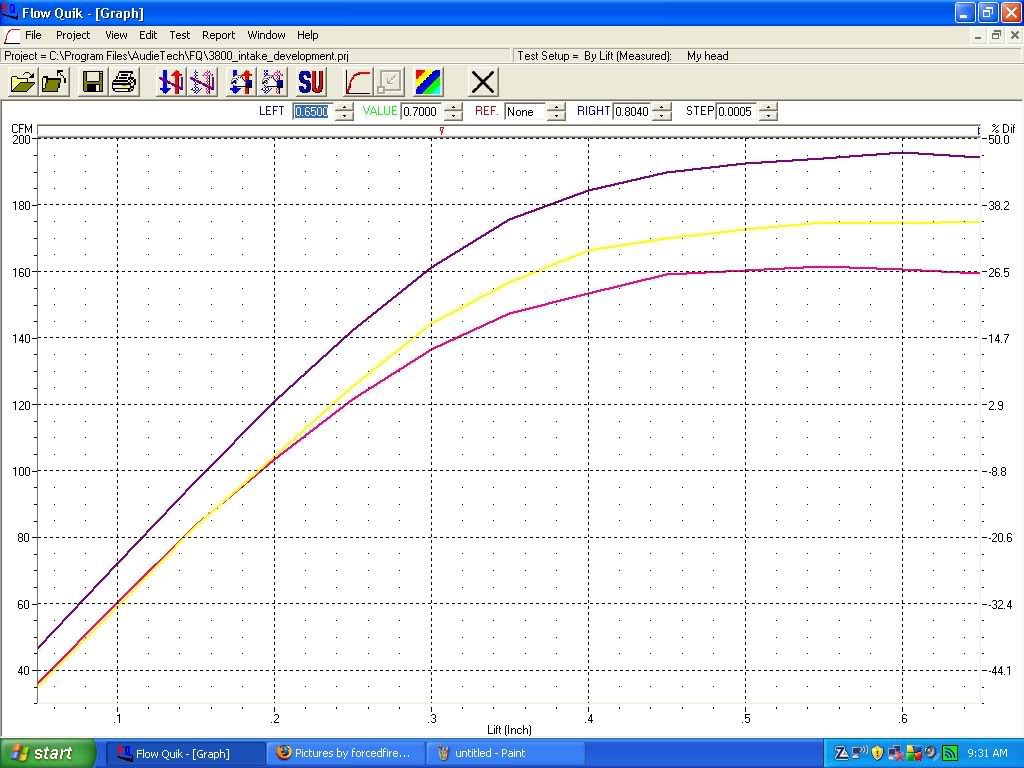
you can work out the hp potential from the CFM, the stock head at 170cfm is about 260 bhp.
Any increase from this adds to this proportionally to the potential. The key word is potential, the real hp will depend on:
- how well the system as an overall system flows
- what rpm the exhaust is tuned for (primary and secondary length and diameter)
- camshaft events and profile
- what rpm the intake is tuned for (intake runner length and diameter, plenum size)Leave a comment:
-
It's not complicated. Just took building the plenum and purchasing about $3000 in equipment, vacuum sources, piping, wood, aluminum etc.Leave a comment:
-
If you were closer I would ship you my m60b40/m62b44 heads :) It doesn't look like it's very complicated to measure CFM? Do you have to account for temp and elevation/pressure?Leave a comment:
-
Not at the moment. The big six has a different bolt pattern, doesn't it? That would just require a new adapter, anyways.Leave a comment:
-
Very interesting results. I am curious to see how these results compare to real numbers. Obviously porting could help flow on larger displacements or larger cams, but how does it affect a stock m20. I believe the engineers designed it pretty well to begin with and increasing the flow numbers will decrease the flow speed out of the head. I am not claiming to be an expert but there was a compromise made by the head designers and I am skeptical that on a stock m20b25 there is much gain to be made on the inlet and exhaust side. How does the sacrifice of inlet speed for overall flow help on a near stock m20?
With that being said, your adjustments look quite interesting. There is no doubt that those increases shown in your graph would help on a turbo m20 or larger displacement m20. I am interested in small adjustments that could be made. Like inlet and exhaust port matching. I would suspect it would help flow both into and out of the head by creating a smooth tract that minimizes turbulence in the flow and helps the engine flow better at higher RPM. Are you doing small adjustments like this or actual adjustments within the inlet and exhaust tract of the head itself?Leave a comment:
-
Nice! to compare, a 2.2L H22 honda stock head is about 272 cfm .
I am curious what M30B35 and M60B40 heads flow, any chance you have those on hand?Leave a comment:
-
Don't expect that from the m20. Old school iron heads with rectangular ports have a lot of potential where the m20 already flows well for it's size.Leave a comment:
-
Nice. That's a huge difference! This will make strokers even more potent!Leave a comment:
-
This is common procedure for flowing bare heads. When doing port research, the manifold will be attached as well as a throttle body minus the plate. The clay may vary 1cfm or so pending the shape, but when you lightly peel it off, it stays near it's original form.
It's how many cubic feet per minute the ports flow.
Close up pics of what porting? The original owner of the "ported" head we flowed used pics on the internet to ruin his head. Pics won't do anything for you.
We have almost decade of porting and flowing experience, you actually have to feel the ports with your finger tips to know what was done.
Here's a close up of some iron heads I ported. You can look at the pics all you want, but without a flow bench and flow testing tools, it's nearly impossible to copy from pics. It took several hours on and off the bench testing for dead spots and grinding out just a tiny bit here and there. Not only that, but the typical back yard mechanic doesn't have a way to measure volume, and how can you look at a pic and tell how much and where the material was removed in the chamber?
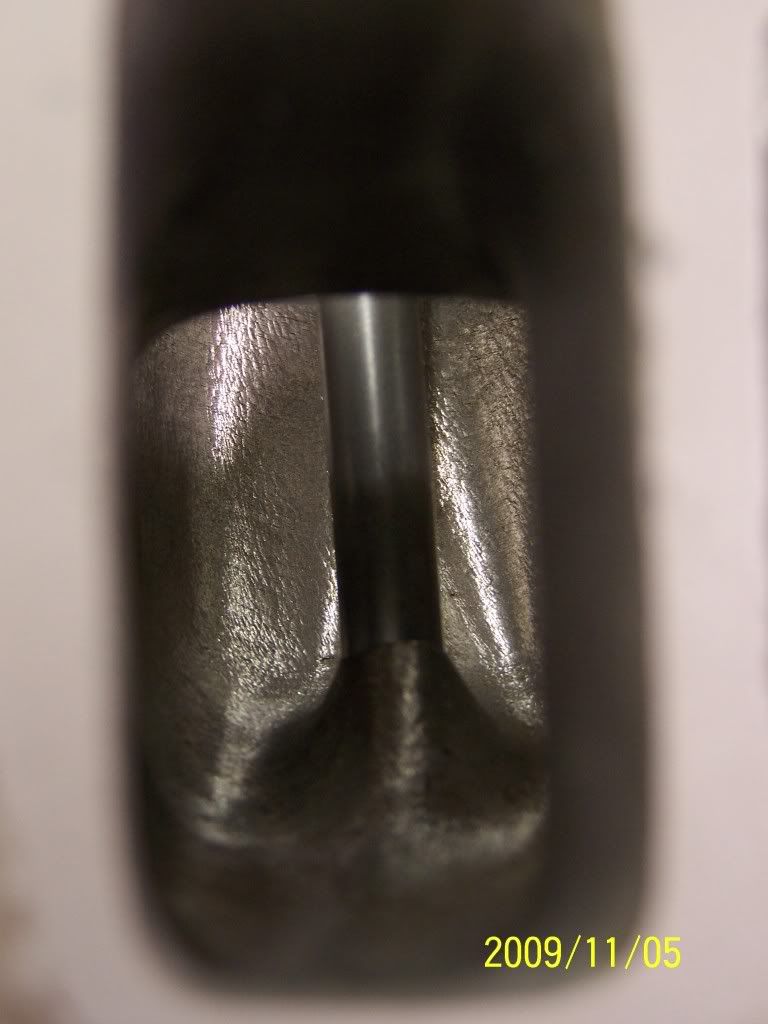
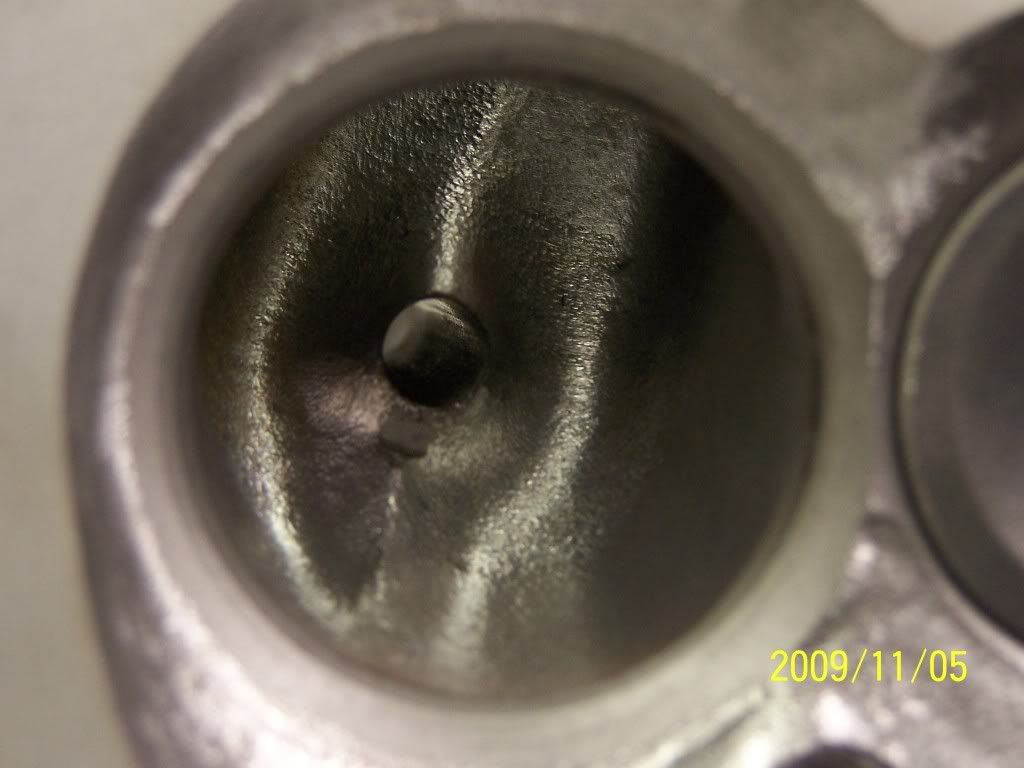
And here's a few plots of that head. Bottom line is stock, next line is after many tests and hours, the top is the flow when the heads left my shop.
 Last edited by ForcedFirebird; 02-17-2018, 10:52 PM.
Leave a comment:
-


Leave a comment: