If this is your first visit, be sure to
check out the FAQ by clicking the
link above. You may have to register
before you can post: click the register link above to proceed. To start viewing messages,
select the forum that you want to visit from the selection below.
I highly doubt it has anything to do with an engine ground my eta ran and even started fine with only one tiny ground strap from the back of the valve cover to the firewall for quite a while (until I found out). The large one from the oil pan cam off.
unplug the "new" 02 sensor and drive it around and see if it still does it.
This should put the car in open loop and take the closed loop timing advance out of the equation.
Also wiht the larger injectors, it could be flooding out the plugs. Have you pulled them out to look at them yet?
Sounds like classic CPS symptoms (stalling and bucking while simultaneously flashing CEL, strange rpm dependent bucking, etc... long starts too?). If the CPS really checks out ok and the CPS wiring seems fine then try swapping in a different ECU if you can (I'd lend you a spare 153 if I were closer, but I'm not). Otherwise, I already would have replaced the CPS if I were you ($40 part).
Honestly, I am no BMW expert by any means, but I do know a thing or two about electronics. I designed the entire harness for my FSAE car from scratch.
My diagnosis:
02 sensor and the associated wire.
Here are my following reasons:
1) When the car is cold it is strictly in open loop and only once it warms up does it become closed loop. So your car works its not being used and then sucks when its being used...
2) The car dying can also be typical of o2 sensor issues. If the ECU detects that the car is running either too rich or too lean, then the car shuts off. This happened to a car that my Ex's dad had. Pulled the o2 sensor fuse and it was fine.
3) You installed an o2 sensor, but since the car is old it may be a different style of o2 sensor. The output (in voltage) of your new sensor may be different than that of your old sensor. Old o2 sensors have a fundamentally different technology than new ones... so it could be that. Was it the original sensor
4) You described the scenario where the car dies and then is fine the rest of the trip. This could be because it seems that the ECU is dynamic. aka it adjusts as you drive. If the car dies the A:F ratio could be too lean or rich (according to the sensor) and the ECU could be registering that the voltage is "invalid" and not use it for the rest of the trip. This concept of a "invalid" voltage is applied in normal ECU's. This is how cars can switch between dynamic and static tuning. Hense why some cars run really rough when they are cold. That is the tune from the factory, once it warms up the car then switches to dynamic tuning.
5) Consider this an amendment of #4, but there are a few sensor that cars need to run an engine (dynamic and static combo). These are Throttle position, MAF or MAP sensor, crank sensor and o2 sensor. These are the fundamentals and the core of your tune. The throttle, and MAF are "inputs" while crank position and o2 are outputs. If 1/2 of your output is wrong... Of course the car is gonna go whack! the crank sensor mainly responsible for timing, not fuel! the o2 sensor is all about the fuel and that seems to be the issue! I mean, you did think you had a bad fuel pump right?
6) There's really not too much to check as far as fuel system for this style of problem. it's pump, injectors, spark, ECU and o2 sensor. You upgraded your injectors but 13 to 19 is not a huge leap so i doubt that is the issue. Generally you can run an engine rich to a certain extent which is why i think your injectors are ok. Also your ECU is dynamic when these issues occur... so the amount of fuel is ECU controlled. It should be able to adjust itself. Your pump is either good or bad really. I haven't heard of any intermittent pump failures except for a bad wire. which if its been there for a while... the wire would have been worn away already and you would have had a blown fuse unless the fuse is self resetting. If you have self resetting fuses in the fuel system replace them with normal ones and see if and or which one blows. Your spark is good or else you would have heard knock and had detonation. This leaves us with the ECU and o2 sensor which are intertwined, either your ECU can't handle the sensor, the sensor is bad or the wiring is in intermittent failure. It's within that section of the wiring deal.
7)I doubt it is the injectors because when its running under the static tune it doesn't flood. The injectors are larger, therefore under static tuning there is more fuel than stock. It doesn't flood then. So if theoretically with the larger injectors and a flooded engine, as soon as the dynamic tune kicks in it should correct that.... right? Even if it doesn't correct it, it won't send MORE fuel if the o2 sensor is running correctly. Unless the sensor is telling it something wrong.
Those are my reasons. here are some proposed diagnostic methods without spending a dime!
Unplug the o2 sensor, run the car and get it hot and see what happens. Run fine? Then it's the o2. a verification would be is if you shut down the car and quickly plug it back in and try again. If it acts up again, you have confirmation!
Check the voltage of the sensor when the car is hot and when it is cold. it should be ~.45V cold and no more than 1.1 or less than 0 warm. It should actually be no where near 1.1 or 0 because that means its on the super extremes of rich or lean!
Here's another diagnostic method for the sensor itself: (copied)
Testing O2 sensors that are installed
The engine must first be fully warm. If you have a defective thermostat, this test may not be possible due to a minimum temperature required for closed loop operation. Attach the positive lead of a high impedence DC voltmeter to the Oxygen sensor output wire. This wire should remain attached to the computer. You will have to back probe the connection or use a jumper wire to get access. The negative lead should be attached to a good clean ground on the engine block or accessory bracket. Cheap voltmeters will not give accurate results because they load down the circuit and absorb the voltage that they are attempting to measure. A acceptable value is 1,000,000 ohms/volt or more on the DC voltage. Most (if not all) digital voltmeters meet this need. Few (if any) non-powered analog (needle style) voltmeters do. Check the specs for your meter to find out. Set your meter to look for 1 volt DC. Many late model cars use a heated O2 sensor. These have either two or three wires instead of one. Heated sensors will have 12 volts on one lead, ground on the other, and the sensor signal on the third. If you have two or three wires, use a 15 or higher volt scale on the meter until you know which is the sensor output wire. When you turn the key on, do not start the engine. You should see a change in voltage on the meter in most late model cars. If not, check your connections. Next, check your leads to make sure you won't wrap up any wires in the belts, etc. then start the engine. You should run the engine above 2000 rpm for two minutes to warm the O2 sensor and try to get into closed loop. Closed loop operation is indicated by the sensor showing several cross counts per second. It may help to rev the engine between idle and about 3000 rpm several times. The computer recognizes the sensor as hot and active once there are several cross counts. You are looking for voltage to go above and below 0.45 volts. If you see less than 0.2 and more than 0.7 volts and the value changes rapidly, you are through, your sensor is good. If not, is it steady high (> 0.45) near 0.45 or steady low (< 0.45). If the voltage is near the middle, you may not be hot yet. Run the engine above 2000 rpm again. If the reading is steady low, add richness by partially closing the choke or adding some propane through the air intake. Be very careful if you work with any extra gasoline, you can easily be burned or have an explosion. If the voltage now rises above 0.7 to 0.9, and you can change it at will by changing the extra fuel, the O2 sensor is usually good. If the voltage is steady high, create a vacuum leak. Try pulling the PCV valve out of it's hose and letting air enter. You can also use the power brake vacuum supply hose. If this drives the voltage to 0.2 to 0.3 or less and you can control it at will by opening and closing the vacuum leak, the sensor is usually good. If you are not able to make a change either way, stop the engine, unhook the sensor wire from the computer harness, and reattach your voltmeter to the sensor output wire. Repeat the rich and lean steps. If you can't get the sensor voltage to change, and you have a good sensor and ground connection, try heating it once more. Repeat the rich and lean steps. If still no voltage or fixed voltage, you have a bad sensor. If you are not getting a voltage and the car has been running rich lately, the sensor may be carbon fouled. It is sometimes possible to clean a sensor in the car. Do this by unplugging the sensor harness, warming up the engine, and creating a lean condition at about 2000 rpm for 1 or 2 minutes. Create a big enough vacuum leak so that the engine begins to slow down. The extra heat will clean it off if possible. If not, it was dead anyway, no loss. In either case, fix the cause of the rich mixture and retest. If you don't, the new sensor will fail.
Solutions:
New sensor
Somehow eliminate dynamics tuning (kills MPG and possibly the motor)
recalibrate your ECU if the value of the sensor is different than prescribed but still reliable. I DO NOT suggest this. this means FLASHING YOUR FIRMWARE and I don't think you have the tools, or skills to do this.
Note: Also check your manifold. If it is old, rusty or has holes that can throw the sensor off too. If not the o2 sensor (which i doubt) its one of the aforementioned sensors which can all be individually tested.
Good luck! Email me with questions and hope this helped!
i checked my cps, afm, and coil and they all checked out fine.
BUT tonight i was driving home as usual and the weirdest thing happened, i was at like 3k rpms just cruising and the tach just dropped off the face of the earth to 0 rpm, the CEL came on and it caught itself again and went back to normal cruising speed. the car stalled for the second the tach plummeted but it came right back to life.
ANYONE?
I had this happen on my old E30 and actually heard it might be the throttle position sensor.
But if you've checked the CPS and that's okay, it's probably an ECU.
I r sawwy : /
Me: "I can't wait to redline my car!"
Mark: "Didn't you just break a rocker arm?"
Me: "Yeah, I don't think I've learned my lesson."
Mark: "You never will."
unplugged the o2 sensor before i drove my car today. didnt buck or anything like that on the highway but it still has a stupid rev limiter at like 5100 now...

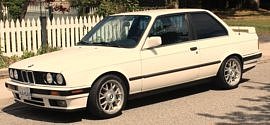

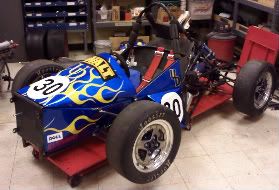
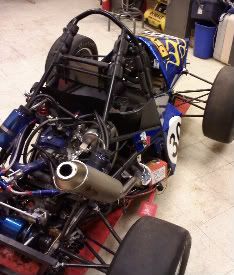 Oh babay babay


Comment