If this is your first visit, be sure to
check out the FAQ by clicking the
link above. You may have to register
before you can post: click the register link above to proceed. To start viewing messages,
select the forum that you want to visit from the selection below.
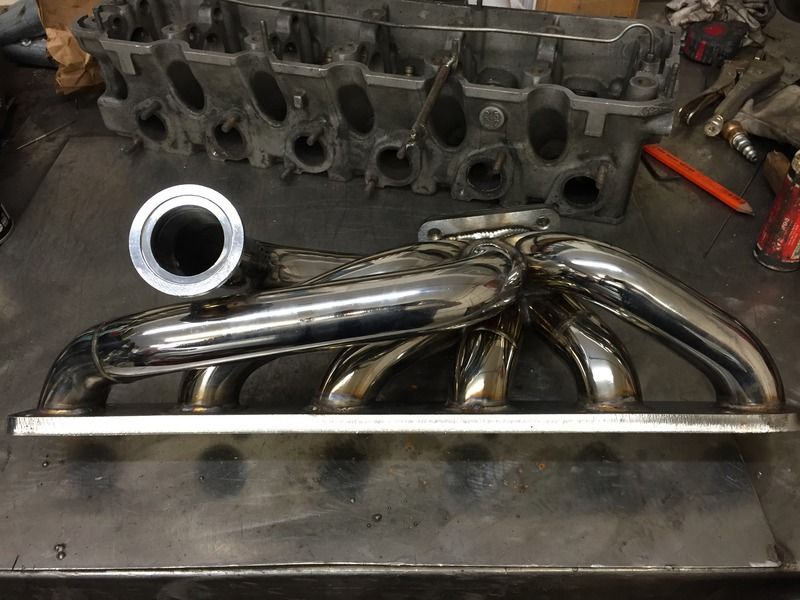
Long overdue update... engine is in, short shifter kit w/DSSR is in, Mishimoto radiator in, driveshaft in. Custom 3" exhaust with a resonator & muffler welded up & installed. Wired up IGN-6 coil pack, QuadSpark ignition module, Megasquirt PNP from DIYAutotune installed. Startup tune ran great (once I fixed the MAP sensor setting - was wrong in the base map). Been dialing in the VE map. Also got the AC idle-up and open-loop idle air control working, once DIYAutotune replaced the Microsquirt module in our MSPNP box (transistor U8 was defective). Installed a GM flex fuel sensor and have been playing with the settings. Also installed a knock sensor but haven't done anything with it yet. Ordered a Raamaudio sound deadening package (package #2). Will eventually order Roadworks Auto E30 convertible carpet kit and either have our sport seats reupholstered or, as my preference, order Corbeau GTS II seats in cloth. I just wish they came black/tan two-tone. Currently hunting for a mint condition dash, as ours has a 3" crack in it. Have our refurbished instrument cluster from Bavrest ready to install once the dash is replaced. Also have my stainless M20 turbo manifold ready to use once we get around to turbocharging (probably about a year out). A/C charged and working great!
As far as I know, the e30 and e36 share the same radiator. I couldnt get the fan shrouds to mount without modifying them, and the e30 fan still hit the bottom of the shroud! I bought a new shroud and will mount it soon....hopefully I wont have any issues, but I plan to document the install for Mishimoto at their request!
Put our very expensive, very new engine on the hoist in preparation for TCD Stage 1 clutch installation:
New pilot bearing pressed into place:
TCD clutch & pressure plate in place:
Trans bolted on, ready to thread everything into place...
Lifted the rear end to help with the angle:
Ended up hanging the engine off of the lifting bracket alone; tried using a load leveler and attaching to the rear of the engine as well, but we couldn't get the load leveler handle to turn once the chain angle got too steep. Very scary - bracket bent quite a bit!
I also had to stand inside the engine bay and *very carefully* lift the tail of the trans over the front edge of the engine bay. With my helper manning the hoist, I then got under the car with a floor jack and a block of wood. We landed the trans tail on the block, then choreographed the hoist & jack to get the engine/trans dropped down and back into place. This part took about an hour, as we went back and forth checking for pinched hoses/wires.
Reinstalled the lower control arm brackets & bushings, per the Bentley's *very specific* weight-loading procedure:
Unfortunately, our modified fuel rail developed a leak at one of the welds, so we went back to a stock rail with a pressure regulator delete adapter, and with the hose barbs adapted for AN fittings:
Connected up fuel lines, hotwired the fuel pump, checked fuel system for leaks & adjusted pressure:
Any thoughts on crankcase ventilation w/vacuum? Specifically, I'd like to see recommendations for catch can/air-oil separator setups with a vacuum source to optimize internal engine sealing. I see four options for venting the valve cover breather to a vacuum source, with or without a catch can/air-oil separator:
1. Vent to exhaust w/tapered bung, using venturi effect from exhaust gas to create vacuum
2. Vent to throttle body (stock) w/check valve, meaning no crankcase vacuum under boost (when blowby seems to be the biggest risk)
3. Vent to intake piping just upstream of the turbo compressor inlet, where both the pulling action of the compressor sucking in air and the inrush of air will create vacuum; probably use a tapered bung as in #1
4. Vent to an air-oil separator connected to an external vacuum pump (probably electric in our application)
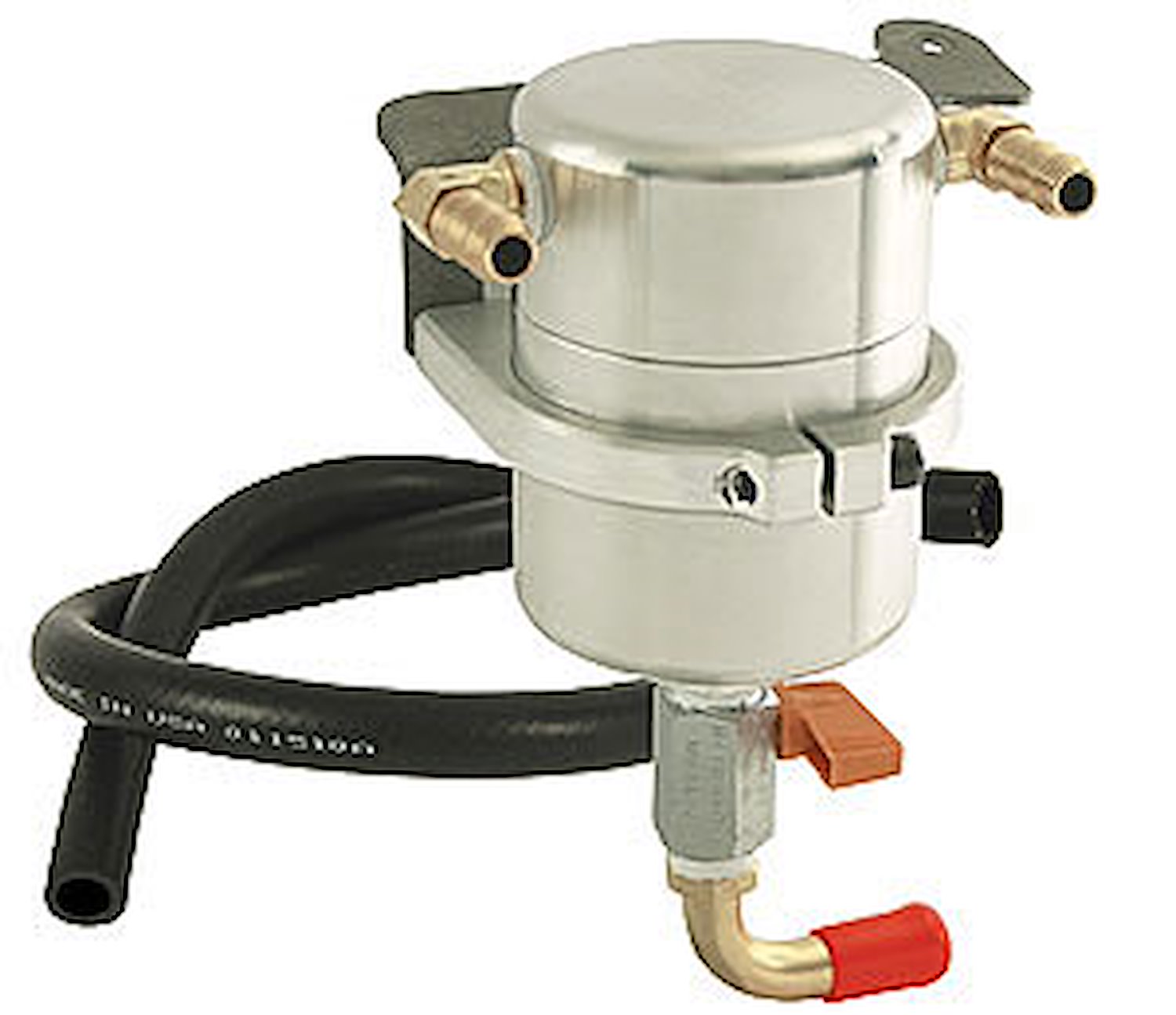
I'm leaning towards options #1 or #3 as a good combination of performance, simplicity, and cost. I almost certainly want to use an oil/air separator or oil catch can. I'd prefer to have the separator/can self-drain into the oil pan, possibly by adding a tee fitting to the -10AN fitting on the oil pan that I had welded on for turbo oil drain.
For the separator, I was thinking something like this:
I went with a ProVent setup with my TCD kit. Probably overkill, but I've been very happy with it. You can check my "Procrastination" thread in the project forum if interested.
Also, I sprung for a polished valve cover to match the distributor blockoff plate. The wrinkle black valve cover is now for sale for $125 plus shipping.
Does anyone know how much vacuum a non-cat M20 exhaust system produces? I'd like to see some real-world numbers. We're planning to install a tapered bung in the downpipe, immediately downstream of the O2 sensor, to help vent the crankcase (via a Trick Flow air/oil separator).
My vac gauge reads about -15hg....3" exhaust from downpipe through a resonator and muffler
Does anyone know how much vacuum a non-cat M20 exhaust system produces? I'd like to see some real-world numbers. We're planning to install a tapered bung in the downpipe, immediately downstream of the O2 sensor, to help vent the crankcase (via a Trick Flow air/oil separator).






Leave a comment: