
my poor old pos dynoed pretty good (88 528e, k&n drop in, aftermarket muffler, no cat), she put down 124hp/151tq at 210k miles.
so the i head swap just gives a little more hp and alot more tq.
sweet, i love torque.
-
did you notice on mine I posted no numbers and only showed the curve? numbers are bull shit unless you are using the exact same dyno (not same kind using same software version) on the exact day at close to the same time. I have done the same car on different days on the same dyno and got different readings.Leave a comment:
-
-
not flaming, just pointing out that the flywheel calculated figures are way optimistic. 28% is even worse. The real loss is probably somewhere between 15-20%.
think about it thermodynamically. if 28% of your power is being "lost" to the drivetrain, most of that is being converted to heat energy. if you make 200hp, that's 56hp being converted to heat. You'd melt something in a hurry. It's also not linear, IE you don't lose 28% or whatever magic # at 500hp the same as you do at 100hp. It may well be 28% at stock eta power levels though, 121 flywheel isn't much to start with.
I appreciate the sharing and I'm glad there are others willing to modify an old motor. I don't get very excited over vanilla plastic covered M50s..Leave a comment:
-
I can only go with the figures posted by people. I wish everyone would post wheel figures, Nando, they don't however. As I have wheel figures for my car I simply worked out the drive train loss from mine (28%) and applied that to the other dyno plots. The 35 hp drive train loss I "see" is "apparantly" what other dyno's here show and with conversions with a physist/engineer this figure is not too unrealsitic apparantly. Given the loss used is high I do not believe I am over reporting the numbers that I suggest. I know originally I posted a 22% drivetrain loss, that was simpley a typing error, now corrected. The reversed calculated figures where done based on a 28% drive train loss though so those are right, I double checked.
Please don't flame me Nando for trying to provide some evidence in my posts, you just assumed I plucked numbers out of thin air without asking me where I got them from.
I agree with the tuning bit though. Mine runs too rich but will be tuned soon. The plan is to ditch the AFM and tune it using a MAP sensor. It's an experiment that should work. Then like Forced firebird a new exhaust will be fitted and a retune will follow.Last edited by eta; 09-16-2010, 01:32 PM.Leave a comment:
-
Nice curves, Brian, what are you 36-24-36? hehe
Almost always power is decreased without a tune. Headers generally make an engine run lean, increase in compression or displacement will make it run lean, etc etc.
I have been around dynos :P and know the importance of tuning. I have owned the tuning equipment for years now, but since we mostly work on GM cars, we had no reason to get an emulator since the stock GM ECM has a data-feed. Just yesterday, purchased an emulator and a few other things for the BMW (even some header tubing w00t!). Plan is to get the fueling decent on the street, then tune the spark advance on the next dyno session. Then headers, re-tune and another dyno.
People don't realize the importance of tuning. We have seen as much as 30hp increases on an otherwise stock motor after a tune, generally OEM stuff will err on the side of rich to give the bearings a little extra life - you ever seen a consistently lean engine after break-down? The bearings look like a teenage kid with acne problem, pistons will often have stress marks and/or chips out of them...then you have the other side, when consistently rich will have glazed cylinder walls, severe build up on the tops of the pistons among a few other things. Just because an engine is NA doesn't mean fueling and timing are any less important, and not just an issue with power, but longevity as well.Leave a comment:
-
I think the important that people forget is that it is very easy to bolt on less power. If you have not done before and after dyno pulls please do not bother to respond, Nando and I, and Brody have all been there, seen it and done it. As a matter of fact Brody is the one I have seen post that his part made less power than stock until retuned, and then and only then was it a signifacant increase. Kudos to Brody for speaking the truth and not just selling his wares like so many others.Leave a comment:
-
even if it reads significantly higher, at best he's making the same HP as a stock M20B25 with all those mods.
and reverse calculated crank figures are still baloney.Leave a comment:
-
-
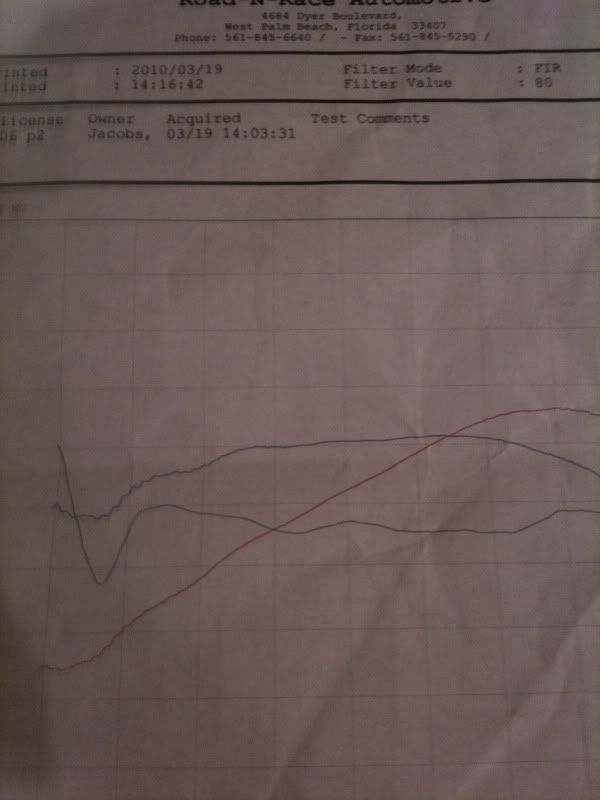
not showing any numbers on purpose, I just wanted to show the sexy curves we are making. on later runs we got the AFR flat and numbers got a little better but I never printed that sheet out. For the most part I dont have a need to rev past 6k because the torque is more usefull than the HP
Leave a comment:
-
True. I expect a lot more once tuned. I am buying an emulator as we speak ;)Leave a comment:
-
okay, blueprinted stock, but any motor you put together should go through that.
everything else about that motor is stock, the cam, the chip, the intake, the exhaust, everything. with a MAF, headers, intake, exhaust, and hours of dyno time with a custom chip, you'd expect more from a motor, no?Leave a comment:
-
Not hardly stock. First post in his dyno thread...
They aren't made anymore, but I bought 3 kits from 14point7.com The first I fried when accidentally letting the 12v touch another lead - DOH! The second one was built and works great, the third is still yet to be assembled. Mine are the JAW (just another wideband), then he came out with NAW (not another wideband), now he has a line of products called SLC. I paid $150 for the kits several years ago which included a digital readout, 3 programmable outputs (plus db-9) and AFR vs RPM dattalogging. The logarithms are outstanding and since the JAW doesn't have any surface-mount components, they are easily repaired/diagnosed by the novice to average electronics geek hehe.Leave a comment:
-
more info on teh homemade wideband? Ive got a good idea about how. Just would like to see your version/interpretation.Leave a comment:
-
why do you UK blokes always use reverse calculated flywheel figures? so the power figures can be inflated any way you like? :p
22% drivetrain loss on an E30 is 100% imaginary. Most of those power figures are sad (especially given the mods), there are stock M20B25s here that make more power with everything 100% stock.
example:
there was also a guy with a 200,000+ mile, stock B25, with just a dinan chip, that had both a better powerband and better peak power than any of those motors.Leave a comment:


Leave a comment: