

-
Depends on the rate of descent. In an all out dive, no, it won't slow down, but it also won't gain speed as fast. According to the data available now the plane wasn't really "diving" until the very end. It climbed and descended multiple times over the duration of the flight and was accelerating for most of the flight, it passed VMO over 2 minutes before the crash. There's a nearly 3 minute period where no electric trim action took place between the cutout and the trim events right before the crash which suggest they turned the electric trim back on. Seems that if in this period of pitching up and down while fighting the airplane they may have had more luck manually trimming the airplane out and reduced control forces if they had reduced power. The data indicates that the throttles weren't retarded until the final dive.
-
^^ wow, yeah, a last ditch desperate attempt to save it. Such a shame.
Question - When a plane is diving, can you slow it down with just throttles? Or is it out of control if overspeed?
From a Seattle Times piece yesterday:
"Two failed sensors at Lion Air, both on the accident flight and on a previous flight, followed by the failure of another just over four months later on the Ethiopian jet, is troubling.
"Lawrence Sciortino, a West Seattle-based retired pilot with 35 years experience flying for Eastern and United airlines in both Boeing and Airbus jets, said that angle-of-attack sensors are historically extremely reliable, and this failure rate seems much higher than normal.
" “In my career, I don’t remember ever having a single angle-of-attack probe send an erroneous signal,” he said. “After all, it’s a simple device. Why are we having so many failures?” "Leave a comment:
-
Well it trims in increments repeatedly until it 'thinks' the aircraft is not at a dangerous AoA, but if you move the electric trim switches to cut out it is physically disabled because electric trim is disabled. The reason this crash appears to have happened after the crew initially turned the electric trim off (page 11), stopping the 'runaway', is the crew turning electric trim back on (page 12). This is likely because of the fact that they failed to retard power after the first descent, causing the aircraft to reach a very high airspeed, eventually exceeding VMO. At these high speeds a dangerously out of trim aircraft will have very high control forces, and timely manual trim adjustment with the wheel could also be difficult, especially with both pilots trying to fight to keep the nose up by pulling the yokes. In a panicked state, turning electric trim back on to allow retrimming with the yoke switches may have seemed like the only solution, when it's really a fatal mistake.
I have heard from a couple of pilots that there is a trim force reduction maneuver for runaway nose down trim practiced in sims which consists of allowing the nose to drop temporarily and trimming while it drops. In this case they did not have enough altitude to make any mistakes or to do this maneuver.Leave a comment:
-
The preliminary report is out http://www.ecaa.gov.et/documents/204...2C(ET-AVJ).pdf
We'll probably never know exactly why one of the AOA sensor outputs began to read very high erroneously, but at this point it's apparent that the system didn't have sensor redundancy sanity checks and that it should not have had full stabilizer trim authority given that fact. As far as I know, Airbus systems have multiple (3?) AOA sensors feeding the flight computers, which will disregard a high reading of one sensor and indicate AOA disagree.Last edited by varg; 04-05-2019, 03:25 AM.Leave a comment:
-
"Boeing defends 737 MAX’s cockpit add-ons, begins new pilot information sessions"
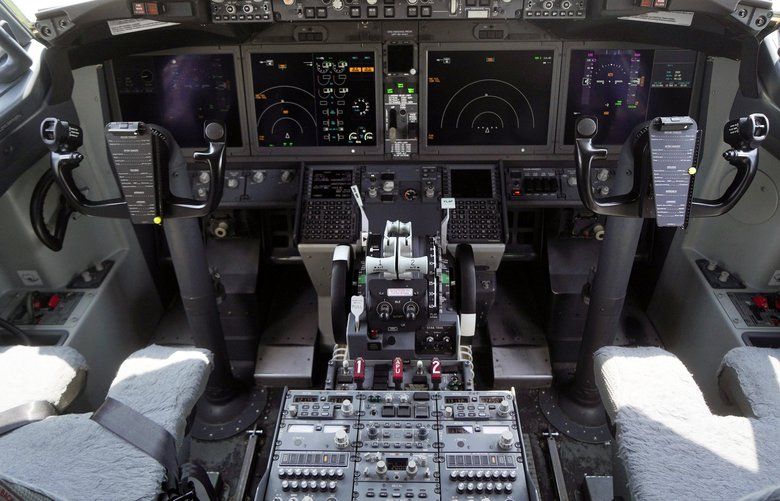
" “There are no pilot actions or procedures during flight which require knowledge of angle of attack,” Hamilton added."Leave a comment:
-
yes. i have sat in the cockpit of the 78 a few times. omg! when the packs shut off for the take off roll, its like you can hear a pin drop up there.Leave a comment:
-
We have a few older NG's without the vortex generators, and they do make a big difference. Nevertheless, I'm keeping my Bose A20's on. The noise level is high enough to cause fatigue after a full day. The silence on the 787 flight deck is unreal, I've had Airbus 330 pilots comment that it's quieter than their cockpit.Leave a comment:
-
the 737 has a really noisy cockpit. the shape of the front fuselage was designed in the 1950's or so. technology wasn't so good. you can see there is a pretty steep rake where the windshield meets just above the nose cone. those vortex generators are an afterthought to help reduce some of the godawful wind noise when sitting up front.
the E-145 i used to fly had a really noisy cockpit too. like the guppy drivers, we wore our headsets for the entire flight to preserve our hearing. in the airbus, everyone pretty much just takes their headseats off and turns on the radio speaker above 18k so we can listen to all that beautiful silence.Leave a comment:
-
As an engineer at a major US aircraft OEM, I feel like quality is going down. The constant push for competitiveness and emphasis on stock performance puts a lot of pressure on suppliers to constantly find ways to do things cheaper. Methods that were tried-and-true are revised to a new process that should work as good but are cheaper. We end up with expensive Service Actions to fix those things because the old way was the right way.
Messier-Bugatti, which had previously only manufactured wheels and brakes, was given the 777X main gear contract because Goodrich didn't participate in the race to the bottom and maintained standards. I'm sure it will be fine...
Our major customers won't RON the new jets until after the first 3 months because there are too many production bugs to work out.
We've been firing all the QA inspectors, but the Air Force won't accept tankers because they're full of FOD. I could go on...Leave a comment:
-
I'll say that I have yet to have an AoA failure (other than one that was self induced once) in about 2000 hours of flying MacDonald Douglas/Boeing jets. It happens in my fleet from time to time, but it is normally not anywhere close to being catastrophic....in fact I can't think of a single example of it being so. So I'd say the answer is "no it isn't hard"Leave a comment:
-
Hometown paper investigation....

The safety analysis:
• Understated the power of the new flight control system, which was designed to swivel the horizontal tail to push the nose of the plane down to avert a stall. When the planes later entered service, MCAS was capable of moving the tail more than four times farther than was stated in the initial safety analysis document.
• Failed to account for how the system could reset itself each time a pilot responded, thereby missing the potential impact of the system repeatedly pushing the airplane’s nose downward.
• Assessed a failure of the system as one level below “catastrophic.” But even that “hazardous” danger level should have precluded activation of the system based on input from a single sensor — and yet that’s how it was designed.
And a question -
What are these? Some kind of vortex generators before the wipers or windscreen?
And is it so hard to build a tough, completely reliable AoA sensor? We've been making these for what, 90 years? Or two that check each other constantly?
.Leave a comment:
-
On the Kenya plane, they found a jack screw from the horizontal stabilizer in full nose-down position. That there seems like a pretty big clue.Leave a comment:
-
my recollection is that helo practice field is a great big triangle to the north and a bit east of the Pensacola commercial airport. i remember seeing it often going in there for my last job. from about 3000 feet, the choppers looked like honeybees buzzing around pollinating flowers.Leave a comment:
Leave a comment: