
You are not getting a full 14.7PSI vacuum at the turbo inlet, but you will be below atmospheric pressure when the turbo is spooled. Air is drawn into the engine because of the pressure differential created across the compressor. There is both the static pressure drop there from the "air pump" action of the compressor, as well as a dynamic pressure drop through the inlet pipe as air rushes in (higher velocity in a fluid = lower dynamic pressure). You don't need a full 14.7PSI vacuum to draw blow-by gases out of the crank case. The blow-by is trying to put the crankcase at a higher pressure than the atmosphere, so even with the PCV going into open air the gases will flow out. They flow out BETTER when something is sucking on the PCV system, with 14.7PSI being the most vacuum you can draw.
Also, the catch can is a good idea in all cases. While the valve cover's oil separator does prevent oil from sloshing out the tube, you still have oil vapor in the air being drawn out, and it condenses on everything making a sticky mess whenever you turn the car off and it cools down / condenses.
-
all OEM turbos route it to the turbo intake. another option is to scavenge some vacuum in the downpipe.
You want vacuum in the crankcase. Not only does it help things like rings seal, it keeps your oil seals happy. the catch can method is ghetto.Leave a comment:
-
i would go with straight to athmosphere option rather then routing it to turbo inlet. Why? Your turbo will live longer without a sludge on core. There is also a risk that with high boost level pressure in crankcase will increase and you can suck some amount of oil thru cover straight to turbo thats why c.can for oil is recommended.Leave a comment:
-
interesting. I will be routing mine this way and see if it helps.Leave a comment:
-
you may be over thinking it.
I believe even on the 324td BMW vents valve cover to turbo inlet.
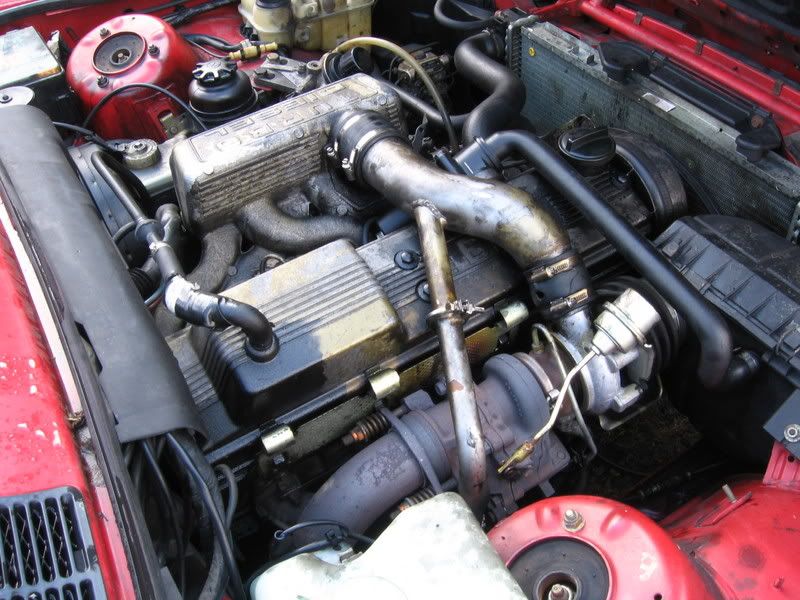

dinan
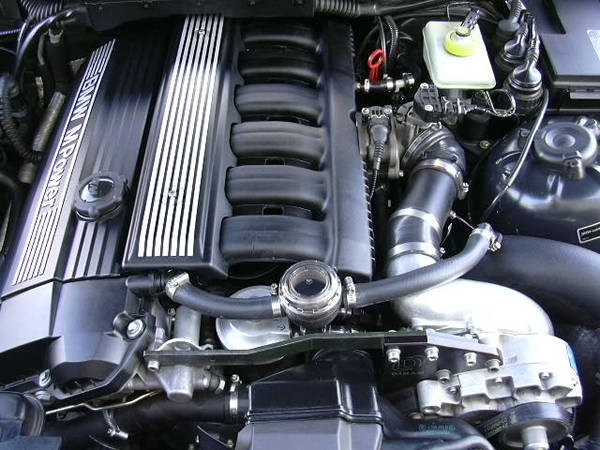
Leave a comment:
-
technically the air coming from the crankcase vent is "metered air" right? by that I mean air that has been see by the AFM or MAF as air that should be burned in a mixture?Leave a comment:
-
most car run the PCV straight to the turbo inlet from the factory so I dont see why it wouldnt work on an E30.
Turbo's draw in LOTS and LOTS of air, more then enough to suck globs of oil out of your valve cover without a baffle.Leave a comment:
-
The turbo inlet is sucking air through a cone filter. Theres just very little area to create anything substantial is seems because the connection for the crankcase vent is so close to open air (the cone filter)
I dont know, maybe Im over thinking this. I really want to know how to do it correctly as it may fix my idle issues on my turbo m42. If the way Kamotors has it routed works, then shit, im all for it. I guess the only way would be to measure Hg of vacuum at that location and report back.
When an engine is decelerating the vacuum created by the intake is well into 21 inches.
I suppose this is the kind of vacuum that is needed to help engine internals operate properly which was briefly discussed earlier. This is what I am most interested/ concerned about.Leave a comment:
-
also a check valve is a terrible idea because it wouldnt be able to vent at all under boost, which means a nice smoke show and puked out oil from you valve cover. I've personally seen what not having a decent vent does and in one pull with a closed vent and you'll get a decent amount of oil pushed out of the valve cover gasket and sprayed all over your turbo/manifold.Leave a comment:
-
Im not sure how much vacuum you would get at the inlet, only way to know is to measure it.
You are right too on the IC pipe, that was a brain fart on my part. You would want to connect behind the TB blade. Sorry about that!
Leave a comment:
-
-
I made a stupid drawing only so people wont be confused by our discussion that is completely off track of op haha
So if you have it routed this way

How many inches of VAC doesnt that pull? it would have to be very little. like +or - 5 inches? is that even enough?Leave a comment:
-
it isnt the same as running at the manifold but it still pulls enough vacuum to give you valve cover a good pull.Leave a comment:
-
i have a really hard time believing that vacuum levels are similar to that of a port behind a throttle body... maybe im confused...Leave a comment:
-
I dont know why you think it doesn't pull a bit of vacuum at the turbo inlet, the compressor definitely pulls vacuum.
Put a piece of paper in front of your turbo while idling, it will suck it right up.
It completely stops backing up of the turbo drain line when draining below oil level(90% of e30 setups)
all the wrxs hook up right into the turbo inlet.

here are my many setups, the car runs the best with vacuum to the inlet.
here is turbo inlet with a catch can

here is an exhaust scavange kit(they stink)

and here is no catch can straight to inlet. OEM baffle in valve cover doesnt draw in oil from my experiance

turbo inlet remains dry after 3kmiles and all pipes are oil free.Leave a comment:


Leave a comment: