-
Good thing you pulled the engine apart and not continue to drive it.
The timing looks aggressive in mid range. What fuel are you running?Leave a comment:
-
I'm not sure, but I'm pretty positive they won't do anything for me after talking on the phone about it.
I have spent some time working on the tune. For now I adjusted my MAP sensor and have it set for the 115 sensor which reads up to 120 kpa according to megalog viewer.
The idle settings were off a bit causing the car to have an idle that increased above 1200 rpm. Once I reset my idle positions that fixed part of the issue but i still would get a bit of an issue with the overrun fuel cut on which would cause the car to stall randomly. Adjusting the fuel cut set points fixed this issue. I adjusted the spark settings a bit but currently see the idle drop when coming to a stop that occasionally stalls the engine. I am still working on fixing it.
I also smoothed the Ve table and my target afr table and it resulted in a decently fuel efficient setup. My OBC was reading 5.7 L/100km (double that since injectors are about doubled in size) while tuning, so 13.4 L/100km or 18-19 mpg and today after some more tuning, minimal boost, and overrun fuel cut on, I am seeing 5.0 L/100km or 23-24 mpg at cruising speed. That's a 30% increase!
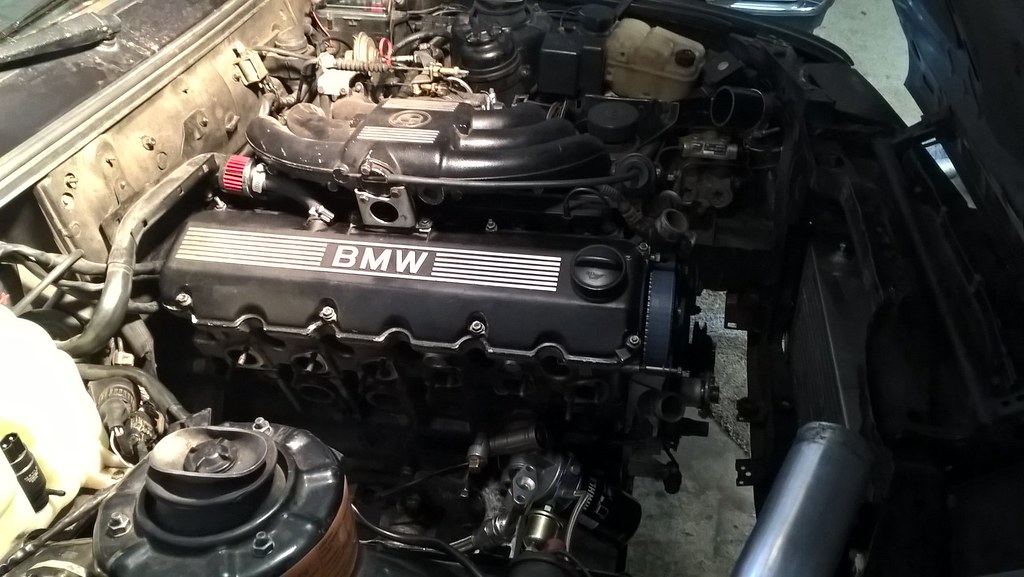
Here are my new maps and a datalog showing what I've got. Keep in mind the engine is 3.1L M20 with 9.5:1 cr and stock 885 head/camshaft.


Looking at these, you cn see the fuel and spark map are pretty smooth. Keep in mind I am at 6,000 ft so the atmospheric pressure is ~80 kpa. The engine is a stroker so keeping RPMs lower is ideal to reduce wear on the cylinder bores and keep piston speed within reason. The engine has a lot of low end grunt already and with the high CR it has good response. The turbo is helpful up hills and in passing lanes and is barely working too much most of the time. The stock cylinder head and cam keeps the power down low in the rpm range so it is ideal at highway speeds then the turbo crams more air in above that.
You can see the hump of the VE of the engine. What I am unsure of is how the stroker crank affects timing. Obviously I can run more advance at cruise to ensure a more complete burn, but does the longer stroke warrant more advance when at higher rpm? I want to make sure i am not knocking so I haven't gone above 31 degrees and am running 91 octane while running in cool temperatures as a safety factor. I want to get this dialed in before temps go up in the spring time. Should my spark map follow the general curve/shape of the VE table?
You can also see on the datalog some good info. The MAP sensor maxes out at 120 kpa which is registering 5.5 psi of boost. The boost comes on quick and the engine revs so fast it is barely usable. You can see manifold temperature was about 65 F and the AFR as boost hits is 12.9. I probably should richen it up to my target of about 12.5, but should I go closer to 12.0? And with it being this fast barely touching 5 psi, I'm not sure I want to see what 10 or 12 psi is like!
I think my wastegate is cracking early so I may add a manual boost controller. I also want to check the MAP sensor and add a cold air box around my air intake. Aside from that I am going to start working on the cold starts with this cooler weather and add EAE for throttle transitions. My TPS has poor resolution with the throttle cracked so I may also put in a new one of those that i pick up at one of these cyber monday sales. It would be great to use TPS based EAE but I would setting for MAP based if it helps my cold start near stalling set-offs.
Oh and here is a brief video of the sound out the back and the led brake lights in action.

Leave a comment:
-
Was the lock in the groove when piston was removed? It probably would have fallen out in any case.
You might be able to argue that the chunk falling out caused the lock to be ejected ?Leave a comment:
-
Component Failure Investigation
Background:
Customer states slipper breakage on one side of the pin tower. We received 1 piston, 1 pin, and 2 circlips. Customer explained that he found the failure after hearing RPM dependent ticking noise and he continued running it until he found the source of the noise.
Measurements:
All dimensions related to the lock grooves were measured as well as the locks themselves and the pin. All components were in-spec except for the lock on the failed side of the pin tower. Details of the inspection dimensions can be found attached to the request form.
Observations:
Examining the fractured surface under slight magnification shows fatigue arrest marks that indicate a crack that initiated around the area of the pick lock groove. There also seems to be an initiation point on the other side of the pick lock groove around the wire lock groove area.
We also observed a deep groove on the opposite pin tower that indicated that the pin ran significantly shifted over in the pin bore towards the side of the failure. The arrow in the picture
Conclusion:
It is my opinion that the order of events is as follows. First, the lock was ejected from the piston causing the pin to slide over in the pin bore. The pin was halted by the rail spacer and the engine continued to operate. Because the pin was only very slightly engaged on one side of the pin bore, the large amount of stress caused compressive plastic deformation in the pin bore. With every engine cycle, the pin became crooked in the pin bore and caused a large amount of stress on the very outside of the failed pin tower area where a crack was initiated at the highest stressed area (the pick lock groove). The pin tower eventually failed as seen in the received sample.
The ejection of the lock was likely caused by improper installation because there were no obvious defects seen in the manufacturing process or in the design. The customer should refer to the instructions in our installation tips document provided with all pistons for a guide on how to install the wire locks (document is in this report packet).Attached FilesLeave a comment:
-
-
Can you cut and paste word for word what the manufacturer is claiming was the cause ?
i can only think the notch for the circlip was gouged badly during installLeave a comment:
-
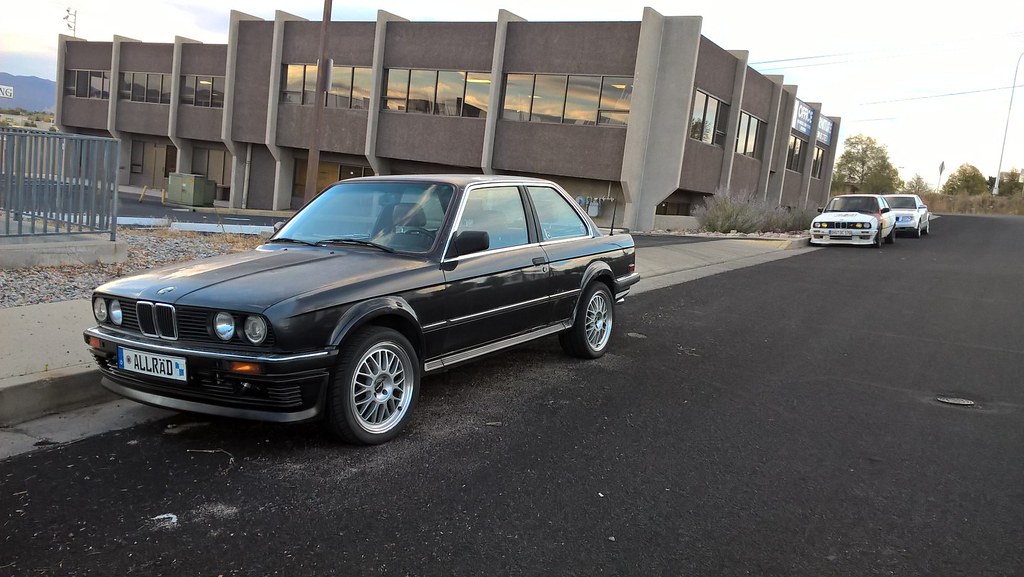
I have an update on the car.
Long story short, JE's 'analysis' claimed the piston installation caused the problem. Why that would take 3000 miles and a turbo to manifest, I have no idea. I didn't think they would do anything for me, especially considering I already bought the replacement.
But i was able to get the new piston back in and finally work on my tune a bit. The car started and drove alright but I needed to work on the tune and was not used to the z3 short shifter and 6 puck clutch.One day while showing the car to my buddy I head fuel spilling onto the ground. It turned out the previous owner never replaced the fuel line eventhough he put the braided steel line over it so it was cracked and brittle due to age.
I replaced that and drove it the next day. The car did great on the highway and it really is a highway cruiser with the 3.64 diffs and the turbo. In 5th you are at the perfect rpm to move into the passing lane.
After showing the car to my brother, he pointed out that my idle pressure was at 100 kpa, which was impossible at the 5500 feet of elevation we were at. I should have thought about that sooner, but this weekend I finally took a look at it. It turns out the barometric sensor was set to the mpx4250 for a 2.5 bar reading, however when i changed the sensor to preset mpx4115, it was reading the expected 80 kpa. This of course changed my fuel and ignition maps so I adjusted them and got the car idling and running. Now the autotune feature seems to be working much better.
So now I am stuck with a 115kpa sensor and running 10 psi of boost here in colorado springs would put me near 160 kpa. i can try to go to the mpx4250, the GM 3 bar, or the MAP Daddy with barometric correction. I'm thinking the baro correction would be useful in the colorado mountains. Is it a direct swap, just by soldering the 3 new connections in? Either way, she is back on the road and boosting just in time for winter. I'm still waiting for the first snow but glad to have it close enough to daily for the time being.
Leave a comment:
-
I also think the taillights look good on this car. The whole theme of the car is something unique and different, almost rat rod, but not rusted on purpose or something silly like that. How often are early e30's even seen? What about 3.1L M20's? And further yet a turbocharged 325ix? 3.64 gears? I didn't even know they existed for the 325ix...
Add it all up and it is a unique car in its own right. Now put on E28 rear spoiler, BBS front valance, and now the taillights make sense.
Add those together and it isn't your typical slammed e30, it isn't trying to blend in or follow the stance bros. The tail lights suit the car in my opinion.
Regarding the pistons, is there any way you can get some confirmation or clarification from JE about the type of failure (ie material failure as opposed to a design failure)? I read online they use FEA in their design to reduce weight and improve integrity before even forging parts.
Maybe you can pitch to them that you are concerned about the long term viability of the remaining pistons considering the type of failure. If possible for peace of mind, see if you can get a simulation result of the piston in their typical loading condition. Maybe with something simple like a factor of safety plot showing the location in question. This would provide you with some validation as well as peace of mind.
It also shouldn't be something that would be difficult to obtain, especially if they already do it with their modeling software.
An interesting article:

From another website:

And another sort of interesting article. On page 5 they talk about side loading: http://www.motoiq.com/MagazineArticl...VE-Engine.aspxLast edited by tschultz; 09-15-2016, 07:49 AM.Leave a comment:
-
the pin fit within the piston nice and smooth, it didnt feel like it was slapping around. I couldn't tell any stress cracks or striations in the piston. If there were some, it would seem the pin would have broken through it.
Thanks, I was rocking the oem tails for a while but I like the look of these better, I think it fits the theme of the car a bit more.
Yeah I am curious to hear what JE says about the piston. It is frustrating when I pay for the pistons and it has a material failure like this. But like you said, glad it wasn't worse.
I have heard the same and done some research on this. There are a few others who turbo's their iX without issue, including user QuintQ5 and ss454 whose build threads were on e30tech before it went down. Quint's car was a stock iX with a turbo making enough power to slip the clutch on an old thunderbird turbo. ss454 had a set of 3.64 diffs and didn't have problems. Right now with the stroker and turbo I am sure I am above 200 horsepower but as has been discussed, torque is what breaks things.
Here is a thread with some resources, but I also picked up a spare 3.64 front diff from ebay.de just in case I do have an issue. http://www.r3vlimited.com/board/showthread.php?t=390800
I basically did this with the 3.64 diff and plan not to launch the car in 1st gear which is what would break it.
A couple pictures of the car/ pulling the car apart.And since the transmission is a torque multiplier, you should be able to run more power through the tcase in higher gears.
165 hp * 3.82 (1st gear ratio) * 0.33 (% of torque to front wheels) = 208 ftlbs at the front diff in 1st gear
vs
165 hp * 2.2 (2nd gear ratio) * 0.33 (% of torque to front wheels) = 120 ftlbs at the front diff in 2nd gear.
With a little math, the 2nd gear equivalent of the torque given to the driveline in 1st gear is:
X * 2.2 (2nd gear ratio) * 0.33 (% of torque to front wheels) = 208 ft lbs
some math and
X = 286 horsepower
What does this mean? Assuming you don't launch the car in 1st gear, but roll onto the power, the diff can see ~300 ftlbs of torque in 2nd gear or higher. That's been my basis on my turbo ix. Plus you don't usually see much boost in first gear so it isnt a scenario you would see unless you were trying to drag race or something.

So here are a few pictures of the different pistons I have. First is the broken piston (JE, 86 mm made for s52/m54b30 crank), and the Ross Racing forged piston (84 mm, made for s52/m54b30 crank). The Ross pistons look like there was no care put into them while the JE pistons have a few bells and whistles like the anti flutter grooves and oem style dish. The JE piston is for a 9.5:1 CR while the Ross is made for a 9.75:1 CR.


And the original pistons that came in the engine, these are the high compression m20 pistons 9.7:1 pistons on the non cat motronic 1.0 engine. Stock 135 mm rods. and it is amazing how heavy the stock pistons and rods are. It is such a large difference in size vs both of the forged pistons.


And showing off that shiny exhaust and that blacked out tail end. Stock ride height and the exhaust is disconnected so that is why the muffler is hanging down low.

I should be back boosting in about 2 weeks.Leave a comment:
-
-
Very nice build. How is the front diff holding up? Really want to eventually turbo my ix but people seem to say they are basically made of glass when you start adding power.Leave a comment:
-
Dang dodged a major calamity there.
Those are very short skirt pistons. Never seen narrow skirt on one side and wide on what I assume is thrust side wonder what that does for weight balance side to side, do they shift the pin further to compensate Fancy stuff
Sent from my SM-G360V using TapatalkLeave a comment:
-
I've seen this before on short skirted pistons with the wrist pin moved up to accommodate a longer rod like these. There is no excuse for that failure, though.
You did good stopping yourself and taking time on the diagnosis, and saved yourself big time in the long run.Leave a comment:



Leave a comment: